Most maintenance software was built for factories and adapted for mines. The clock runs on hours, the components move between machines, the budget is set by component life, and the work happens in the pit. This is what an asset management system has to do before a mine should trust it, and the questions that expose one that cannot.

A CMMS (computerised maintenance management system) runs the work: work orders, preventive maintenance schedules, defects, parts, labour. An EAM (enterprise asset management) adds the lifecycle view: capital planning, replacement economics, reliability analytics, multi-site consolidation. In practice most mines run a CMMS for the planners and a spreadsheet for the budget, and the two disagree.
The distinction that matters is not the acronym. It is whether the budget and the reliability numbers are built from the same component records the planner is scheduling against. If they are, a change in component life flows through to next year's capital line without anyone re-keying it. If they are not, the EAM is a reporting layer on top of data it does not control.
Factory maintenance runs on a calendar. Mining maintenance runs on a meter. A haul truck that works a double shift reaches its 500-hour service in half the calendar time, and a system that schedules by date is wrong the day that happens. Services must fall due by engine hours, odometer or tonnes, with a grace window.
Mining components outlive the machine they were first fitted to. A transmission is pulled at 12,000 hours, rebuilt, and fitted to a different truck. If the system resets its history on the new install, the fleet's life data is fiction and every forecast built on it inherits the error. Components need one lifetime record that follows them across parents, with hours since rebuild tracked separately from lifetime hours.
The person who finds the defect is standing next to the machine with gloves on, often without signal. If the system requires a desk, the defect goes on a notepad. Backlogs that are hard to log do not get logged, and the backlog is the early warning the whole system depends on.
The enterprise platforms that dominate mining take 12 to 24 months to implement and require specialist consultants to configure. A mine cannot wait 18 months for availability intelligence, and by the time it arrives the operational context has changed. A modern cloud-native system should load a site's asset register, components and parts from a CSV in days, go live with a pilot in weeks, and add further sites without re-implementation.
The invoice for the breakdown is the smallest line. The rest is spread across the shift report, the stores ledger and next year's budget, where nobody adds it up.
Put these to any vendor, SEAMIQ included, and ask to see each one working on a screen with your own data.
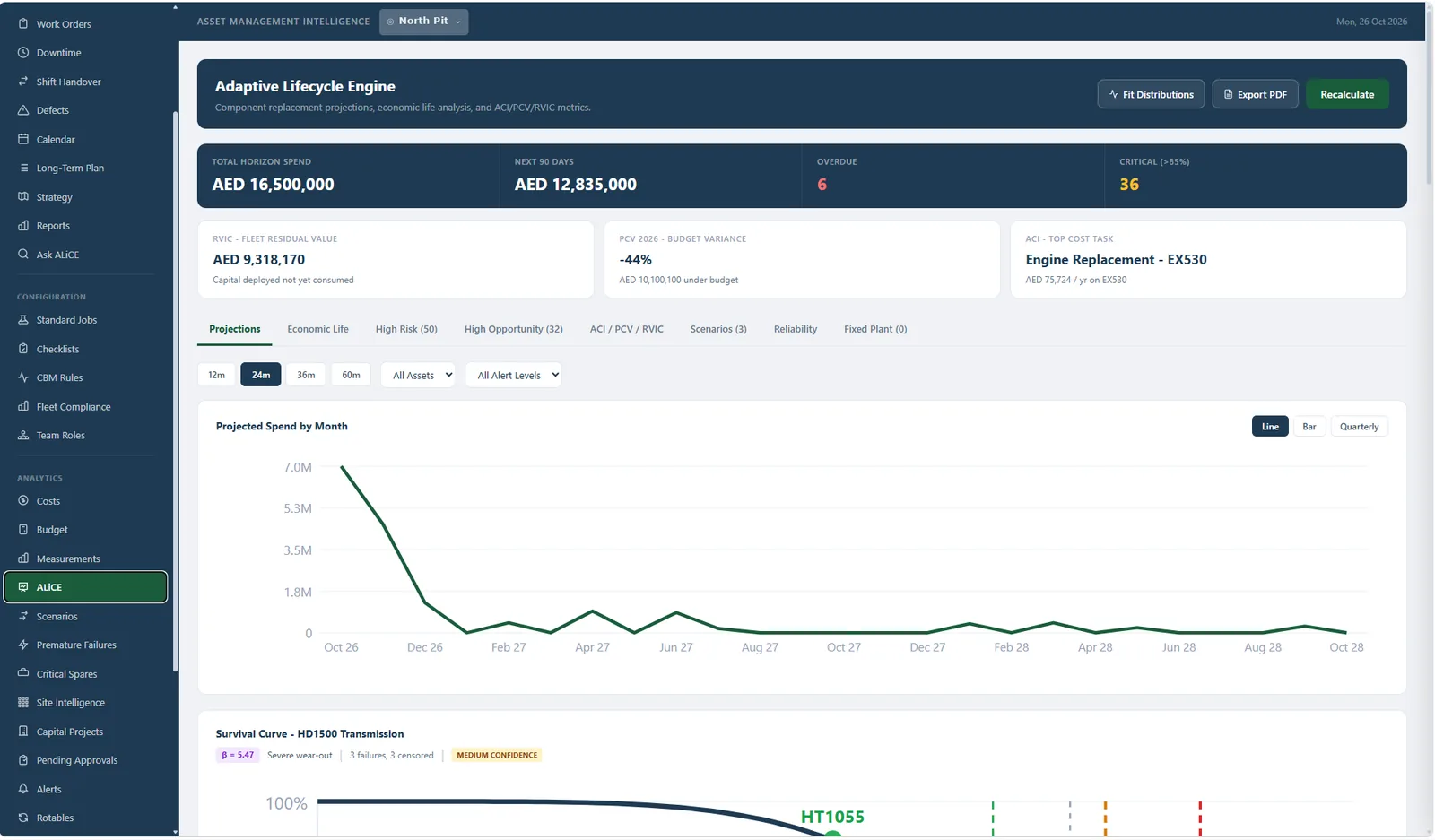
AssetIQ was built against exactly this list. It runs the shift (work orders, PM calendar, defects, standard jobs), the fleet (components and rotables with lifetime history, downtime with reasons, availability) and the money (the Adaptive Lifecycle Engine, versioned budgets, critical spares, shutdowns) from one set of records, for any OEM, with a technician view that works on a phone in the pit.

Send us your fleet list and the service strategies you run today. We load your makes and models and walk the checklist through AssetIQ with your machines on the screen.
Or email us directly: info@seamiq.io